San Leandro highlight
East Bay industrial
Oakland and the East Bay waterfront form one of the nation's largest container ports, moving 80,000 imports and 62,000 exports monthly.
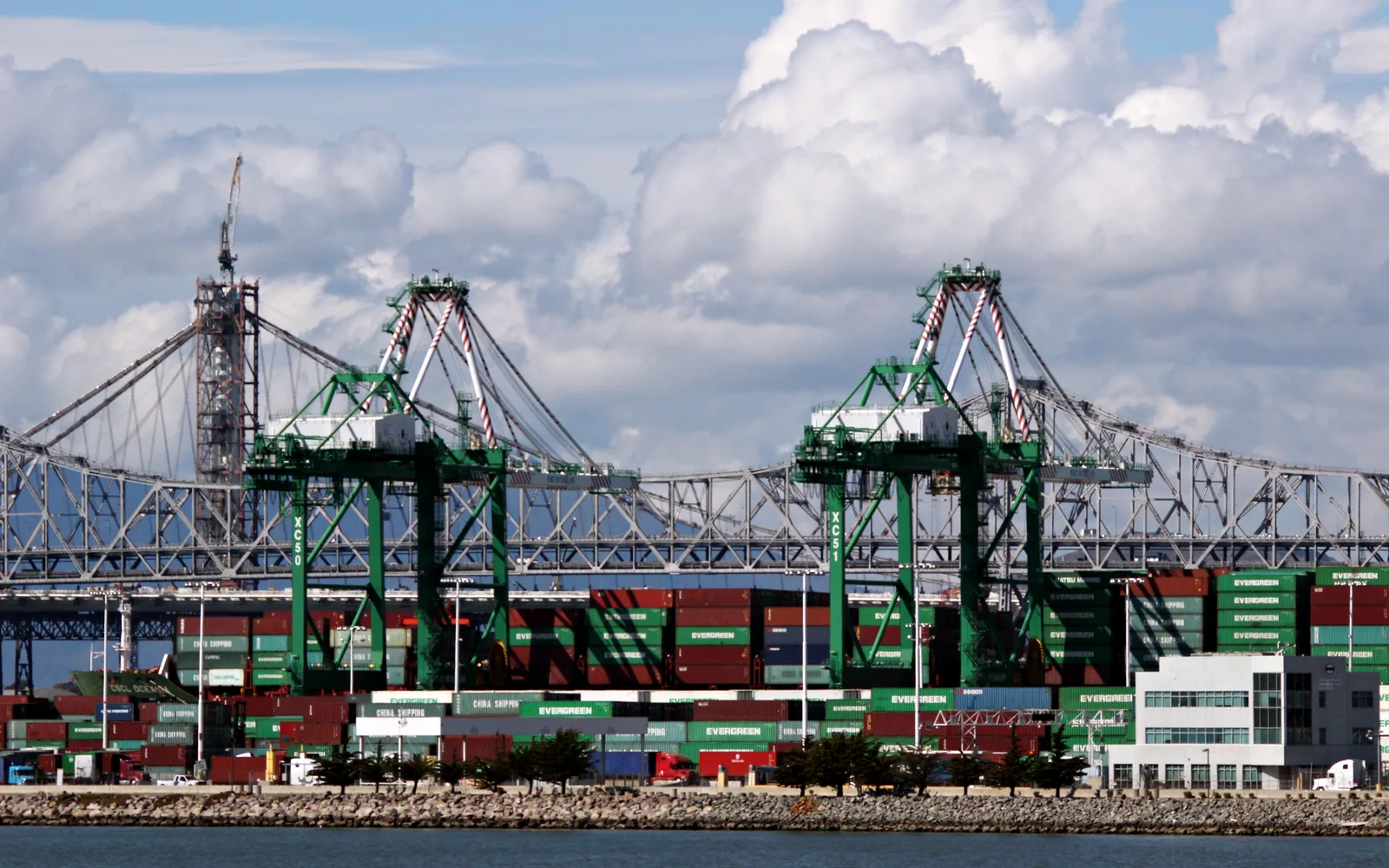
The Port of Oakland sits at the center of East Bay commerce, operating four marine terminals, 18 deep-water berths, and two intermodal rail facilities that connect ships to regional and national rail networks. In May 2024 alone, the port handled 80,039 full-container imports and 61,931 full-container exports, a scale that makes it one of the busiest container ports on the West Coast. The port runs 24 hours a day, every day, connecting international trade to local distribution.
This maritime infrastructure exists because of geography: deep water in the Bay, sheltered berths, and rail access to the Central Valley and beyond. Families with working-waterfront trades—longshoremen, drivers, mechanics, logistics workers—form the backbone of this industrial machine. The Port of Oakland's commitment to modernization includes a $640 million Turning Basins Project to accommodate larger, more efficient vessels and advance toward zero-emissions operations.
For many San Leandro households, work in or connected to maritime commerce, transportation, or manufacturing is a primary income. A term life policy sized to replace five, ten, or twenty years of that working income is how families protect themselves against the risk of losing it. Working-class neighborhoods often go overlooked in financial planning; term insurance is built for exactly this situation.